
Radio-HPLC validation is a mandatory requirement for any radiopharmaceutical laboratory that releases radioactive medicinal products in compliance with GMP. It differs fundamentally from classical method validation under ICH Q2(R2) (effective since June 2024, replacing ICH Q2(R1)): short-lived radionuclides such as ¹⁸F (half-life 110 min) make classical precision and accuracy studies impossible; consequently, method validation in radiopharmacy requires adapted parameters, such as recovery instead of accuracy and repeatability instead of reproducibility. The relevant regulatory frameworks are the Ph. Eur., GMP Annex 3, and the EANM guideline on the validation of radioanalytical methods (Gillings et al. 2020). Laboratories that understand and systematically implement these requirements can validate their radiochemical purity via radio-HPLC on the first attempt, ensuring audit readiness and avoiding costly rework.
👉 Want to know the 7 key facts about radio-HPLC basics?
⚠️ Important: ICH Q2(R2) has been in effect since June 2024. ICH Q2(R1) is no longer valid. You can find out exactly what has changed and what this means for your validation protocols in the article: ICH Q2(R2) Revision vs. ICH Q2(R1): What has changed →
Summary of the article on Radio-HPLC Validation
- Radio-HPLC validation must comply with ICH Q2(R2), Ph. Eur., GMP Annex 3, and EANM guidance.
- Full validation is required when no applicable Ph. Eur. monograph exists; otherwise, method verification may be sufficient.
- Key parameters include recovery, specificity, linearity, repeatability, LOQ, robustness, and system suitability.
- Accuracy is not always possible since a radioactive reference standard is not available. The closest reference standard is the “cold” standard.
- Limit of Quantification (LOQ) is dependent on the radio-detector and its sensitivity.
- Recovery is assessed first and typically must be 90-110%; decay correction is essential for short-lived radionuclides.
- Validation documentation must include protocols, raw data, chromatograms, acceptance criteria, QA approval, and revalidation requirements.
Contents
- Overview of relevant regulations
- When is validation required? And when is verification sufficient?
- Validation parameters for radio-HPLC according to EANM and ICH Q2(R2)
- Validation Documentation: What Auditors Want to See
- Common Errors in Radio-HPLC Validation
- Conclusion: Radio-HPLC validation requires a current, dedicated approach
- FAQ: Radio-HPLC Validation
- Sources
- Next Step
- About the Author
Overview of relevant regulations
The following regulations apply to radio-HPLC validation in radiopharmacy, and all of them must be addressed in the validation protocol:
| Set of Regulations | Contents | Relecance |
|---|---|---|
| ICH Q2(R2) (June 2024) | Validation of analytical methods (current version) | Mandatory basis; replaces Q2(R1) |
| ICH Q14 | Method development, linked to Q2(R2) | Robustness & Development Data |
| Ph. Eur. 2.2.46 | General chromatographic separation methods | Basis for method parameters |
| Ph. Eur. 2.1.66 | Radioactivity measurement | Calibration and detection efficiency |
| GMP Annex 3 | Manufacture of Radiopharmaceuticals | Process and Method Validation |
| GMP Annex 15 | Qualification and Validation in general | Validation planning and documentation |
| EANM Guide Lines (Gillings et al. 2020) | Validation of radioanalytical methods | Practical guide and orientation, specific to radiopharmaceuticals |
| Radiation protection law | StrlSchG, StrSchV (Germany) | Radiation protection in the validation process |
Important: The EANM guideline (Gillings et al., EJNMMI Radiopharmacy and Chemistry, 2020) is the only dedicated document to date that addresses the validation of radioanalytical methods specifically for radiopharmaceuticals and supplements ICH Q2 with radiopharmacy-specific requirements.
When is validation required? And when is verification sufficient?
An important point that is often unclear in practice:
- Validation is required if no Ph. Eur. monograph exists for the radiopharmaceutical or if the product deviates from the monograph.
- Verification is sufficient if a Ph. Eur. monograph exists and is followed. In this case, it is only necessary to demonstrate that the method has been correctly implemented in the laboratory (e.g., system suitability, detector linearity, LOQ).
- There are currently over 70 Ph. Eur. monographs for radiopharmaceuticals. Full validation is required for all other products.
Validation parameters for radio-HPLC according to EANM and ICH Q2(R2)
The EANM guideline (Gillings et al. 2020) defines the following validation characteristics for radio-HPLC regarding radiochemical purity, limit test, and identity:
| Parameter | Radiochemical Purity (Radio-HPLC) | Radiochemical Purity (Limit Test) | Radiochemical Identity (Radio-HPLC) | Notes |
|---|---|---|---|---|
| Accuracy (→ Recovery) | + | + | – | Substitute for classical accuracy |
| Precision (Repeatability) | (+) | – | – | Not always possible with short t½ |
| Intermediate precision | (+) | – | – | Not always possible |
| Specificity | + | + | + | required |
| Limit of detection (LOD) | – | + | – | Not required, except for limit tests. |
| Limit of quantification (LOQ) | + | – | – | Required for RCP |
| Linearity | + | – | – | Required for RCP |
| Range | + | – | – | Required for RCP |
(+ = normally required; (+) = not always possible; – = not required)
1. Recovery: the most important first step
Recovery must be determined prior to all other validation parameters. This is a requirement specific to radiopharmacy that does not exist in standard ICH Q2 validation.
Why? Certain radioactive impurities (e.g., [¹⁸F]fluoride, [⁶⁸Ga]gallium ions) can be retained within the injection system, pre-filters, column material, or tubing. If the entire injected radioactivity is not eluted, the RCP calculation will be erroneous.
Practical methods for determining recovery:
- Comparison of injected radioactivity with eluted radioactivity (fraction collection)
- Bypass analysis: Sample flows directly through the radio detector (without column) – peak areas are compared, after decay correction
- Spike recovery: Sample is spiked with a known amount of radioactive impurity (e.g. [¹⁸F]fluoride).
Acceptance criterion: Recovery 90-110% (EANM guideline)
2. Specificity
Specificity, defined as the method’s ability to clearly separate the main peak from radioactive impurities, is a requirement and must be fully validated.
Practical execution:
- Demonstration of baseline separation between the main peak and known radioactive impurities
- Acceptance criterion: Resolution Rs > 1.5 (baseline separation preferred)
- Validation primarily using non-radioactive reference substances (“cold standards”), flexible timing
- If cold standards are unavailable: use a second, orthogonal HPLC method (different column or mobile phase) for confirmation
Important: Certain radioactive impurities, such as [¹⁸F]fluoride, can adsorb to HPLC columns and exhibit significant peak tailing; this must be taken into account during specificity testing.
3. Linearity
The linearity of the radio-detector must be demonstrated within the relevant activity range (in kBq or MBq)—not based on substance concentrations, as is the case with conventional HPLC.
Practical implementation:
- At least 5 activity levels across the entire measurement range (from LOQ to the maximum expected sample activity)
- Plotting of measured versus calculated activities
- Acceptance criterion: Correlation coefficient R ≥ 0.99
- Account for detector dead-time corrections at high count rates
- Radiodetector linearity is often part of instrument calibration (OQ/PQ), these data can be used for method validation
4. Precision (Repeatability)
Repeatability should be determined through sequential analysis of at least six homogeneous samples of the radiopharmaceutical, with an activity concentration close to that used in routine analysis.
Decay correction is mandatory: peak areas must be corrected to T₀.
A0 = A * e-𝜆tA₀ = corrected peak area, A = measured peak area, t = Time interval in minutes between the injection under consideration and the first injection, λ = decay constant (ln2/t½)
Acceptance criterion: RSD ≤ 2% for retention times; for RCP values: specification in absolute percentage points, e.g., RCP ± 0.5%.
Intermediate precision: Since HPLC systems are generally automated, the omission of intermediate precision can be justified, unless manual injections are performed. Alternatively: different analysts evaluate the same chromatograms (manual integration is subjective).
5. Accuracy
Determining trueness is not always possible, as few certified radioactive reference standards are available. Recovery takes the place of classical trueness; this is the solution specific to radiopharmacy. Note: This should not be confused with detector trueness, which is assessed using a calibration source during qualification and requalification.
Practical approaches:
- If the identity of radioactive impurities is known and “cold” standards are available: spike-recovery experiments using various impurity concentrations (e.g., 1%, 3%, 5% [¹⁸F]fluoride)
- If no radioactive reference standards are available: trueness is derived from cold-standard validation (taking radiodetector characteristics into account)
- Supplementary radio-TLC method recommended to verify radio-HPLC results
Acceptance criterion: recovery 90-110%
6. Limit of Quantification: LOQ
The limit of quantitation is particularly relevant in radio-HPLC validation, as the expected activities of radioactive impurities are very low. It depends on type of radio-detector.
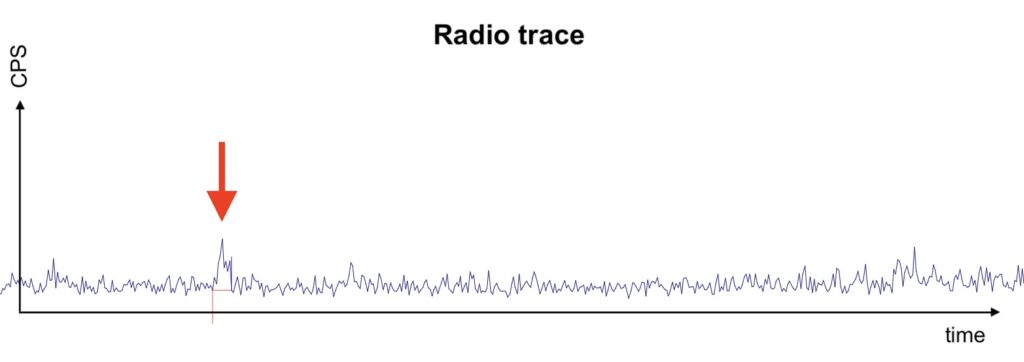
Specific feature: The LOQ is expressed in terms of absolute radioactivity (kBq or MBq/ml), not concentration. The LOQ must be defined such that small radioactive impurities (e.g., 0.5% of the total activity) can still be reliably quantified.
Practical determination:
- Samples with known radioactivity are allowed to decay to low activity levels and are then analyzed.
- Acceptance criterion: Signal-to-noise ratio S/N ≥ 10.
Note: According to EANM guidelines, a Limit of Detection (LOD) is not required for radio-HPLC RCP determinations.
7. Robustness
New in ICH Q2(R2): Robustness is primarily evaluated during method development (linked to ICH Q14) rather than necessarily as part of the formal validation study, though it must be documented.
Parameters to be tested for radio-HPLC validation:
- Flow rate (± 0.1 mL/min)
- Mobile phase composition (± 2% organic content)
- Buffer pH (± 0.1)
- Column temperature (± 1-2 °C)
- Column batch (at least 2 different batches)
- Robustness of peak integration: comparison of chromatogram evaluation by different analysts (manual integration can be subjective)
8. System suitability: SST
System suitability testing is mandatory prior to every analysis run in accordance with Ph. Eur. 2.2.46 and GMP requirements and must be documented in the batch record.
Typical system suitability parameters:
- Retention time of the reference peak (acceptance criterion: ± 2% of the target value)
- Resolution (Rs) of critical peak pairs (Rs ≥ 1.5)
- Peak symmetry / tailing factor (T ≤ 2.0)
- Detection efficiency of the radio-detector (within calibrated limits)
- Background activity (below defined limits)
Validation Documentation: What Auditors Want to See
1. Validation Plan (VP)
- Description of the method and its intended use
- List of all parameters to be validated, including justification
- Explicit reference to ICH Q2(R2) (no longer Q2(R1)) and the EANM guideline
- Justification for deviations from ICH Q2(R2) (e.g., intermediate precision not feasible due to short t½)
- Acceptance criteria for each parameter
- Responsibilities and timeline
2. Validation Protocol (VB)
- Raw data from all validation experiments
- Decay corrections fully documented, including formula, half-life, and reference time point
- Chromatograms (UV and radio) as an appendix
- Recovery data as the first section
3. Validation Report (VR)
- Summary of all results against acceptance criteria
- Conclusion: Method validated / not validated
- Approval by QA
4. Revalidation Plan
- According to the EANM guideline, revalidation is required in the event of:
- Changes to the manufacturing process (potential for different impurities)
- Changes to product composition (higher activity, different excipients)
- Significant changes to the analytical method (e.g., new column with a different stationary phase, significant changes to the eluent)
Common Errors in Radio-HPLC Validation
Error 1: Still referencing ICH Q2(R1)
ICH Q2(R2) has been in effect since June 2024. Validation protocols referencing Q2(R1) are technically obsolete and may be flagged during audits.
Error 2: Recovery not determined
Determining recovery is the first and most critical step in radio-HPLC validation; it is the step most frequently overlooked or misunderstood as part of system suitability testing.
Error 3: No decay correction during precision assessment
Using peak areas without decay correction to T₀ results in systematically skewed RSD values.
Error 4: Radio-detector linearity not validated
The radio-detector is often simply taken for granted. Validation is incomplete without demonstrating linearity across the relevant activity range (R ≥ 0.99).
Error 5: No revalidation plan
Validation is not a one-time event. Without a defined revalidation plan, the GMP-compliant basis for method changes is missing.
Error 6: System suitability not documented in the batch record
Verbal confirmation is insufficient. Every system suitability test must be fully documented.
Conclusion: Radio-HPLC validation requires a current, dedicated approach
Method validation in radiopharmacy is not merely a simplified ICH Q2 protocol; it is a distinct discipline involving adapted parameters, specific regulatory frameworks, and unique documentation requirements. With the introduction of ICH Q2(R2) (June 2024) and the EANM guideline serving as a practical framework, the regulatory basis is now clearer than ever.
By understanding these differences—prioritizing recovery as the initial step, consistently applying decay corrections, and referencing current guidelines—one can validate a radio-HPLC method on the first attempt, avoiding costly rework and audit findings.
FAQ: Radio-HPLC Validation
Which guideline currently applies to the validation of radio-HPLC methods?
Since June 2024, ICH Q2(R2) has been the current validation guideline, replacing ICH Q2(R1). Additionally, the EANM guideline (Gillings et al. 2020, EJNMMI Radiopharmacy and Chemistry) serves as the specific standard for radioanalytical methods in radiopharmacy. Both documents must be referenced in the validation protocol.
What is the difference between validation and verification in radio-HPLC?
If a Ph. Eur. monograph exists for the radiopharmaceutical and is followed, verification (demonstrating correct implementation in one’s own laboratory) is sufficient. If no monograph exists or if there is a deviation from it, full validation is required.
Why must recovery be determined first?
Because radioactive impurities (e.g., [¹⁸F]fluoride) can adhere to column material, filters, or tubing. If the entire injected activity is not eluted, the RCP calculation will be systematically flawed, rendering all other validation parameters meaningless. Acceptance criterion: recovery of 90–110%.
How often must a radio-HPLC method be revalidated?
According to the EANM guideline, revalidation is required in the event of: changes to the manufacturing process, changes to product composition, or significant changes to the analytical method (e.g., a new column with a different stationary phase). Additionally, trend analyses of system suitability data should be monitored for method drift.
Can I continue to use my old ICH Q2(R1) validation protocol?
Technically, no. ICH Q2(R2) has been in effect since June 2024. Existing protocols should be updated during the next revalidation. The difference in substance is minor for most radio-HPLC validations, but referencing the current guideline is relevant during audits.
What does GMP Annex 3 specifically require regarding validation in radiopharmacy?
GMP Annex 3 requires that all analytical methods used for batch release be validated. It acknowledges that validation parameters adapted for radiopharmaceuticals may be used but requires an explicit justification in the validation protocol.
Sources
- Gillings N. et al. (2020): EANM guideline on the validation of analytical methods for radiopharmaceuticals. EJNMMI Radiopharmacy and Chemistry 5:7. DOI: 10.1186/s41181-019-0086-z
- ICH Q2(R2): Guideline on validation of analytical procedures. EMA/CHMP/ICH/82072/2006. valid from 14. June 2024.
- European Pharmacopoeia: Ph. Eur. 2.2.46, 2.1.66, 2.1.3
- EU GMP Annex 3: Manufacture of Radiopharmaceuticals
Next Step: Build up Radio-HPLC knowledge in a structured way
Do you want to learn more about radio-HPLC in your laboratory and implement audit-ready radio-HPLC validation in accordance with ICH Q2(R2), EANM guidelines, and GMP Annex 3?
In the free HPLC-Academy HPLC-knowledge base, which includes HPLC validation, you will learn:
✅ Systematic setup of radio-HPLC detectors
✅ Self-paced learning with numerous videos, instructions, checklists, and practical examples
✅ Practical explanation of validation requirements according to Ph. Eur., ICH Q2(R2), and GMP Annex 3
✅ Common validation errors and how to avoid them from the start
✅ Bonus: Free HPLC Detector Guide (PDF)
Free. Available immediately. No Spam.
👉 Get free access to the knowledge base now →
(includes a free Radio-HPLC Guide)
Or perhaps you would like to have your existing radio-HPLC methods and validation documents evaluated by an expert?
👉 Request HPLC Validation Audit →
About the Author
Dominic Franck is an HPLC specialist with over 15 years of experience in the pharmaceutical and radiopharmaceutical industries and the founder of the HPLC Academy. He learned the radio-HPLC basics over 11 years ago at the University of Cambridge and ETH Zurich, where he further developed his knowledge and wrote a paper on the subject. He served as head of the Analytics Department and has overseen numerous HPLC validations and audits. On his YouTube channel, he provides practical guidance on using HPLC and shares tips and tricks for troubleshooting. Through the HPLC Academy and the specialized Radio-HPLC module, he helps users, analysts, and QC managers develop, optimize, and validate their methods on the first try and pass audits with confidence.
Many videos on HPLC (German): YouTube
Connect with me: LinkedIn
Free HPLC knowledge database: HPLC-Academy
Last updated: September 2026