Impulses
Practical knowledge regarding HPLC and everyday laboratory life: Here you will find useful articles, clear explanations, and valuable tips covering method development, sample preparation, and troubleshooting.
Impulses helps you master common HPLC challenges and make your daily laboratory routine more efficient.
- Don’t want to miss any news?
- Get the latest articles in your inbox?
- Be part of the special HPLC community?

Forced Degradation in HPLC: Why the Stress Test is Crucial for Method Development and Validation
Forced degradation in HPLC, also known as stress testing, is a key component of HPLC method development in pharmaceutical analysis. In this process, an active pharmaceutical ingredient (API) is deliberately exposed to stress conditions such as acid, base, oxidation,...
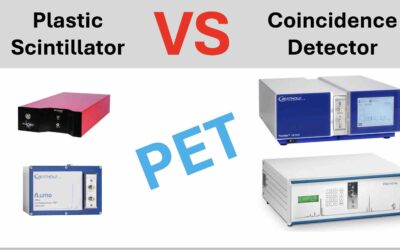
Coincidence detector vs. plastic scintillator: Which Radio-HPLC detector is better for PET?
Coincidence detectors and plastic scintillator detectors are two types of radio-HPLC detector for PET; they differ significantly in terms of their operating principle, sensitivity, space requirements, and cost. Both types are suitable exclusively for PET isotopes. A...
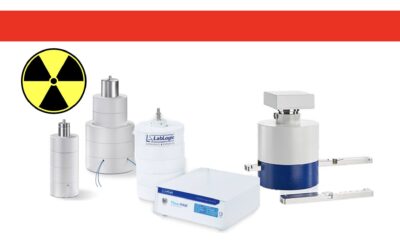
Radio-Detector Radio-HPLC: Which Type is Best for your Laboratory?
The radio-detector is the heart of any radio-HPLC system. At the same time, it is the component where most errors occur during system selection. There are four basic types of detectors: the NaI(Tl) gamma detector, the plastic scintillator beta detector, the...
Radio-HPLC Validation: Best step-by-step guide according to Ph. Eur., ICH Q2(R2), and GMP Annex 3
Radio-HPLC validation is a mandatory requirement for any radiopharmaceutical laboratory that releases radioactive medicinal products in compliance with GMP. It differs fundamentally from classical method validation under ICH Q2(R2) (effective since June 2024,...

ICH Q2(R2) Revision vs. ICH Q2(R1): What has Changed and What does it Mean for Your Validation?
The ICH Q2(R2) revision has been in effect as a mandatory requirement since June 14, 2024, replacing ICH Q2(R1) as the global standard for the validation of analytical methods in the pharmaceutical industry. For QC managers, analysts, and validation specialists in...
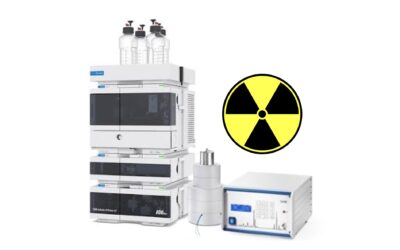
Radio-HPLC Basics: The 7 Key Differences from conventional HPLC
Radio-HPLC is a specialized analytical technique in radiopharmacy and radiochemistry and is used to determine radiochemical purity and its sideproducts. The radio-HPLC consists of a conventional HPLC with a radio detector attached. This is the method of choice for...

Über Dominic Franck
Ich bin Dominic Franck, habe in Radiopharmazie promoviert, bin HPLC-Experte und Trainer. Mein Schwerpunkt liegt auf der Radio-HPLC, Methodenentwicklung, Validierung und Troubleshooting.
Ich verbinde praktische Erfahrung aus der pharmazeutischen Analytik mit einer strukturierten Vorgehensweise. Mein Ziel ist, dir nicht nur eine einzelne Antwort zu geben, sondern dir zu helfen, Methoden, Daten und Systementscheidungen fachlich besser zu beurteilen.